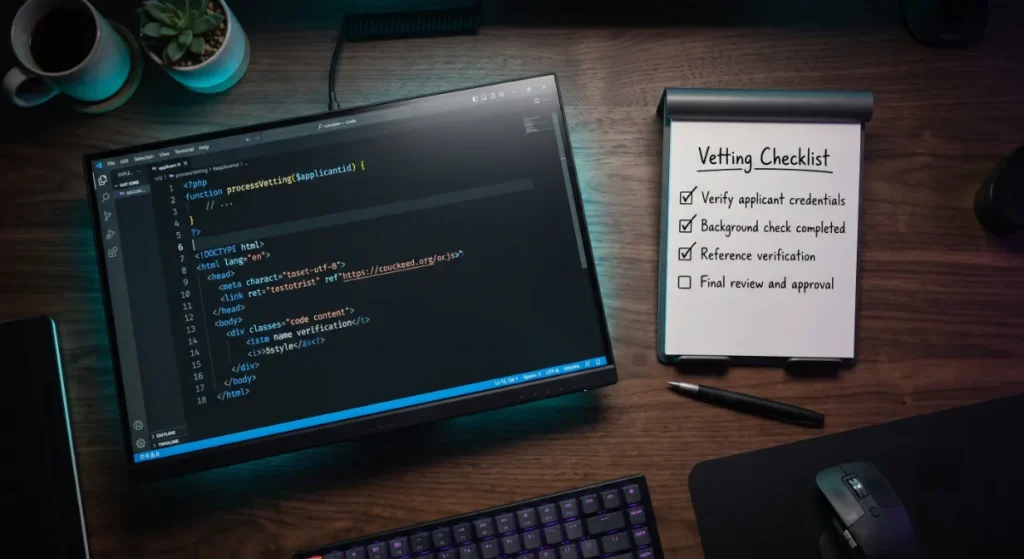
- Hire a custom WordPress developer who shows live builds, quotes a fixed price, and names what they will not build.
- Hourly rate predicts almost nothing. Total hours multiplied by skill decides your real project cost.
- Most US small-business builds land between $2,000 and $12,000, depending on scope, not on developer job title.
- Freelancers suit clear, small scopes. Studios suit revenue-critical custom builds. Agencies suit large, multi-team enterprise programmes.
- Own your domain, hosting, and admin account from day one, or you are renting your own website.
A custom WordPress developer is worth hiring only once they show you three live sites they built, quote a fixed price in writing, and say plainly what they will not build for you. Together, those three proofs separate a safe hire from an expensive rebuild. The hourly rate matters far less.
Across 80+ WordPress builds over eight years, the projects that went wrong almost never failed on code quality. Instead, they failed on scope, ownership, and silence. Meanwhile, the projects that went well started identically: a clear brief, a fixed number, and a custom WordPress developer honest enough to say “you do not need that.” Therefore, before you compare quotes, you need a way to tell the two apart. That is what this guide gives you.
What “Custom WordPress” Actually Means
“Custom WordPress” means the design, layout, and functionality are built for your business rather than bought as a ready-made theme. However, the phrase is used loosely. Some developers call a purchased theme with swapped colours “custom.” Others hand-code every template. Because both charge similar prices, the label alone tells you nothing.

WordPress is worth being careful about because of its sheer reach. According to W3Techs usage statistics, WordPress runs roughly 42% of all websites as of mid-2026. Consequently, the talent pool is enormous and wildly uneven. Anyone can install WordPress. Far fewer earn the title custom WordPress developer.
In practice, quotes fall into three buckets:
- Theme-based. A premium theme, lightly restyled. Fast and cheap. Hard to extend later.
- Builder-based. Built in Elementor, Bricks, or Gutenberg with custom design. Flexible, editable by you, quality depends entirely on the builder’s discipline.
- Hand-coded or hybrid. Custom theme, custom post types, custom queries. Slowest to build, cheapest to maintain at scale.
None of these is automatically right. For example, a five-page consultancy site does not need custom post types. Conversely, a listings portal built on a bloated theme will hurt within a year. Therefore, the question is not “custom or not.” It is “custom enough for what I am doing.”
Pro tip: Ask any custom WordPress developer which of those three buckets your project belongs in, and why. A developer who answers “hand-coded, always” is selling hours, not judgement.
Once you know what you are buying, you can work out who is qualified to sell it to you.
Who Should I Hire to Build a Custom WordPress Website?
Hire a freelancer for small, well-defined scopes. Hire a specialist studio when the site drives revenue. Hire a full agency when the programme spans many teams, markets, or systems. Ultimately, the right answer depends on scope and risk rather than on budget alone.

| Route | Typical US rate | Best for | Main risk |
|---|---|---|---|
| Marketplace freelancer | $15–$50/hr | Small fixes, simple pages | Vetting burden falls on you |
| Experienced freelancer | $50–$150/hr | Clear scopes, brochure sites | One person, one calendar |
| Specialist studio | Fixed project pricing | Revenue-critical custom builds | Less capacity than an agency |
| Full agency | $100–$250+/hr | Multi-team, enterprise programmes | Overhead you may not need |
Agencies typically charge 30% to 100% more than an equivalent freelancer, because you are also buying project management, QA, and cover when someone is ill. Admittedly, that premium is worth it on complex work. On a ten-page site, it is mostly overhead.
Meanwhile, studios sit deliberately in the middle. You get one accountable senior custom WordPress developer doing the work, plus the process an agency brings. Consequently, for most small businesses that combination is the sweet spot. Our own custom WordPress development work is structured exactly that way, and our pricing page shows the fixed numbers up front rather than hiding them behind a call.
Whichever route you pick, the budget conversation comes next, and it is where most people get misled.
What It Costs to Hire a Custom WordPress Developer in 2026
Expect $2,000 to $12,000 for most US small-business custom builds in 2026. Simple brochure sites start near $1,000. WooCommerce stores commonly run $5,000 to $15,000. Enterprise programmes exceed $25,000. Furthermore, the spread is enormous because the title custom WordPress developer covers a dozen different jobs.

What most guides get wrong: the hourly rate barely predicts total cost. Cost equals rate multiplied by hours. Because a senior custom WordPress developer removes hours, a higher rate frequently produces a lower invoice. For example, a $120 developer finishing in twenty hours costs $2,400. A $30 developer taking eighty hours costs the same, and you carry the revision cycles.
Think of it like paying a taxi by the meter in a city you have never visited. The cheapest per-mile driver can still take the longest route. Ultimately, you are not buying miles. Instead, you are buying arrival.
Pro tip: Ask every candidate for a fixed price against a written scope. If they will only quote hourly, ask for a not-to-exceed cap. A custom WordPress developer who cannot estimate their own work will not estimate yours.
Additionally, budget for what sits outside the build: hosting, premium plugin licences, and content. These are usually paid to third parties, not to your developer. A quote that quietly omits them is not cheaper. It is incomplete.
Getting quotes that do not add up?
See exactly what a custom build costs, line by line, with no discovery call required. View transparent pricing.
With a realistic number in mind, you can start testing whether a candidate deserves it.
7 Checks Before You Hire a Custom WordPress Developer
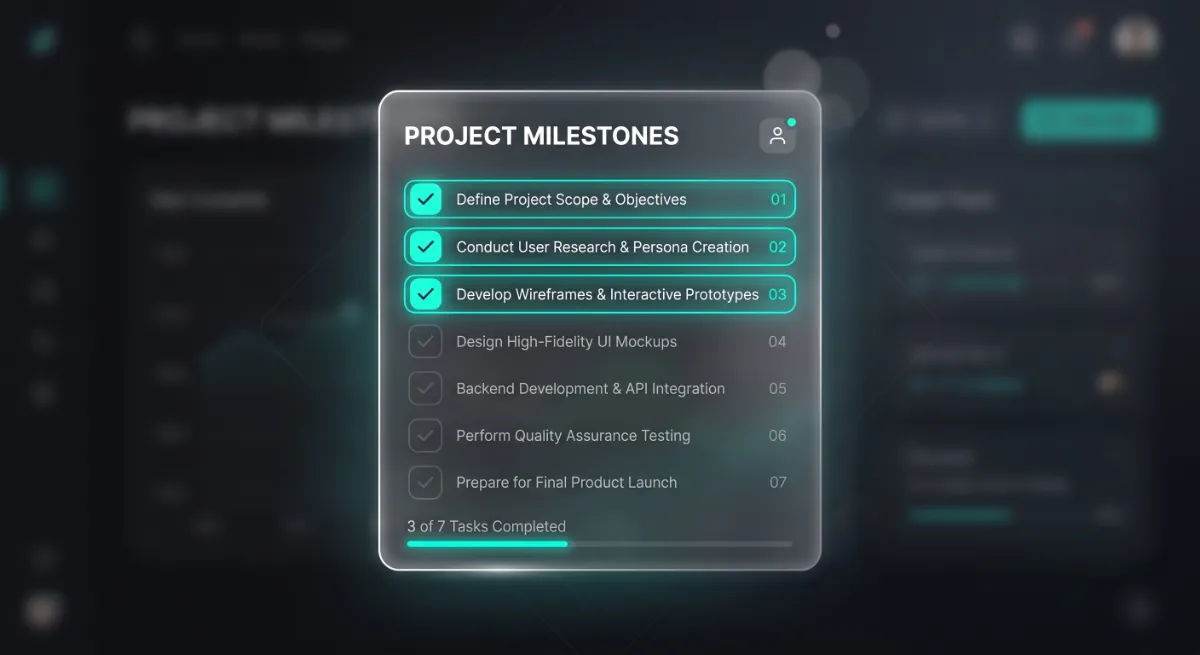
Before you hire a custom WordPress developer, run these seven checks. Specifically, the first three we call the Three Proofs Test, and they eliminate roughly nine out of ten bad fits on their own. The remaining four confirm the good ones.
- Proof of build. Three live URLs they personally built, not the studio they once contracted for. Then open them. Also click things.
- Proof of price. A fixed number against a written scope, before work starts.
- Proof of exit. A plain answer to “what happens if I leave after launch?” In short, you want your files, database, and accounts.
- Performance evidence. Ask for a PageSpeed or Core Web Vitals result on a site they built. Google’s Search Central documentation sets the bar at LCP under 2.5 seconds, INP under 200 milliseconds, and CLS under 0.1.
- Maintenance answer. What breaks after launch, and who fixes it. In fact, silence here is expensive later.
- Communication cadence. Who you speak to, how often, and on what channel. As a rule, weekly beats “whenever.”
- A refusal. Ask what they would not build for you. Indeed, anyone who says yes to everything has not read your brief.
Additionally, check four matters more than most buyers realise. The web.dev Web Vitals reference measures those thresholds at the 75th percentile of real visits, so a developer quoting a single Lighthouse score is showing you a lab number, not the field. Ask which one it is.
Finally, here is the observation that surprised us most. Across 80+ builds, the most expensive rescue jobs we inherited were rarely badly coded. They were undocumented. Nobody could say why a function existed, so no custom WordPress developer dared remove it. Consequently, documentation is not a nice-to-have. It is the difference between a $400 fix and a $4,000 one.
If a custom WordPress developer clears all seven, you are in good shape. If they stumble on the next section, walk away.
Red Flags That Should End the Conversation
When you screen a custom WordPress developer, some warning signs are worth a follow-up question. These are not. Furthermore, each one has cost a client we later rescued real money, and none of them improves with time.

- They own your hosting or domain. You must be the account holder. Always.
- 100% payment upfront. Instead, staged payments protect both sides, and fifty-fifty is normal.
- No written scope. Verbal scope becomes an argument roughly six weeks in.
- Guaranteed #1 rankings. Nobody can promise this. Google does not sell that guarantee, so neither can they.
- Vague timelines. “A few weeks” is not a date. Therefore, ask for milestones.
- No revision policy. Revision limits belong in the contract, not in someone’s memory.
Similarly, be careful with the custom WordPress developer who agrees to everything instantly. Of course, enthusiasm feels good in a sales call. Nevertheless, a build with no pushback usually means nobody has thought hard about your actual problem yet.
Sometimes, though, the honest answer is that you should not hire anyone at all.
When You Should Not Hire a Custom WordPress Developer
Do not hire a custom WordPress developer if you need fewer than five pages, have no custom functionality, and your budget is under roughly $1,000. In that situation, a well-chosen premium theme configured carefully will serve you better, and you can invest the difference in content and photography.
Likewise, hold off if your business model is still moving. Since custom builds encode decisions, timing matters. Consequently, if the offer, the audience, or the pricing is likely to change within six months, you will pay to build something and then pay again to unbuild it. Therefore, validate first, then build.
Finally, do not hire for a rescue you have not diagnosed. If your current site is simply slow, a targeted speed optimization engagement usually costs a fraction of a rebuild and solves the actual complaint.
If none of those apply, you are ready to brief properly.
What to Prepare Before You Hire a Custom WordPress Developer
Prepare four things before you hire a custom WordPress developer, and your quotes will get sharper, cheaper, and more comparable. Specifically, vague briefs produce padded estimates, because developers price uncertainty. Remove the uncertainty and the padding goes with it.
- Write a one-page brief. What the site must do, for whom, and what success looks like in numbers.
- List your must-have pages and features. Separate them from nice-to-haves, honestly.
- Gather your content. Copy, logos, images. In fact, missing content is the single most common cause of delays.
- Set your real budget range. Not your dream number. Your actual ceiling.
- Register your domain and hosting yourself. After that, add the developer as a user.
- Decide who signs off. Choose one decision-maker, because committees double timelines.
- Ask for the same fixed scope from every candidate. Otherwise, you are comparing nothing.
Then send that brief to three candidates. Then compare their questions, not just their prices. The developer who asks the sharpest questions almost always builds the best site, because they are already modelling your problem instead of your invoice.
Pro tip: Ask each candidate to name the riskiest part of your project. Their answer reveals experience faster than any portfolio, because only people who have been burned know where the fire starts.
Use the tool below to see which route your project actually points toward.
Still not sure who to trust with the build?
If your site earns money, the cost of a bad hire is not the invoice, it is the rebuild. We will look at your brief and tell you honestly whether you need us, a freelancer, or nobody yet. Ask for a straight answer.
Frequently Asked Questions
How much does it cost to hire someone to build a WordPress website?
Typically, most US small-business WordPress builds cost between $2,000 and $12,000 in 2026. Simple brochure sites can start near $1,000, while WooCommerce stores typically run $5,000 to $15,000. Scope drives the number far more than seniority does, so define your pages and features before you compare quotes.
Is it cheaper to hire a freelancer or an agency?
Freelancers are cheaper per hour, commonly 30% to 100% below agency rates. However, agencies include project management, QA, and cover when someone is unavailable. For small, clearly scoped projects a freelancer usually wins on value. For complex or revenue-critical builds, that structure earns its premium.
How long does it take to build a custom WordPress website?
Generally, a straightforward custom site takes two to four weeks. Larger builds with e-commerce or custom functionality run six to ten weeks. Timelines slip most often because content is not ready, not because development is slow. Gather your copy and images before the project starts.
What questions should I ask before hiring a WordPress developer?
Ask any custom WordPress developer for three live sites they personally built, a fixed price against a written scope, and what happens if you leave after launch. Then ask what they would not build for you. That last question exposes judgement, and judgement is what you are actually paying for.
Do I own my website if a developer builds it?
Yes, but only if you registered the domain and hosting in your own name. Ownership of the code and database belongs to you once you have paid, provided your contract says so. Never let a developer hold your domain, hosting account, or administrator login.
Should I hire a freelancer, an agency, or a specialist studio to build my WordPress website?
Choose a freelancer for small, well-defined scopes. Choose a specialist studio when the site drives revenue and needs custom functionality with real accountability. Choose a full agency when the programme spans multiple teams, markets, or systems. Match the route to project risk rather than to budget alone.
When should I hire a professional for a custom WordPress website?
Hire a custom WordPress developer once your site carries revenue, needs functionality no theme provides, or must meet real performance and accessibility standards. Below that threshold, a good template is honest value. Otherwise, see our custom WordPress development service for what a proper build includes.
Conclusion
Hire a custom WordPress developer who proves their work, prices it in writing, and hands it back cleanly when asked. Specifically, three things decide the outcome: buy scope rather than hours, insist on live evidence instead of screenshots, and own your domain and hosting from the first day. The hourly rate you were worried about will turn out to be the least important number in the whole process. Write your one-page brief, send it to three candidates, and compare the questions they ask you.
Want a second opinion on a quote you have received?
Send it over. We will tell you what it covers, what it quietly omits, and whether the number is fair, even if the answer is that you should hire someone else. Get an honest read.
A one-page sheet with the seven checks, the six red flags, and the exact wording to request proof of build, price, and exit, so you can screen any custom WordPress developer in a single email.
Get it free →This article was last reviewed and updated in {{UPDATED}} to reflect the latest WordPress development pricing and hiring best practices.