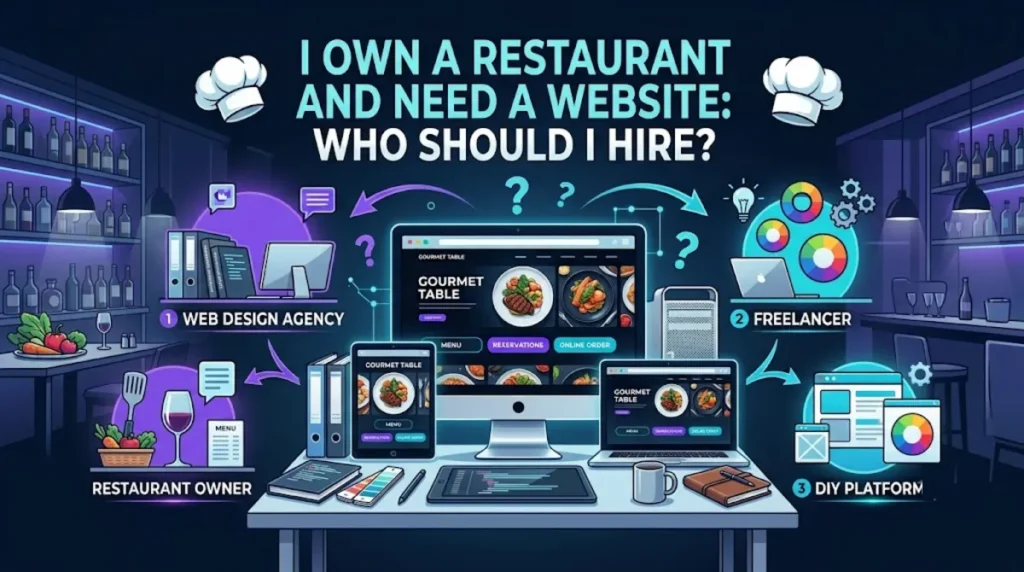
- The right person to build a restaurant website is someone who understands direct ordering, local SEO, and mobile-first design, not a generalist who just makes it look nice.
- The biggest hidden mistake is the third-party trap: sending your own website traffic to delivery apps that charge 15 to 30 percent commission and keep your customer data.
- Your menu must be real HTML text, not a PDF, because PDFs are hard to read on phones and nearly invisible to Google and AI search.
- A custom restaurant website typically costs $2,000 to $8,000 in 2026, depending on size, online ordering, and features.
- Vet for direct-ordering thinking, an HTML menu, local SEO and mobile speed, and clear ownership of your site and customer data.
If you own a restaurant and need a website, hire someone who builds for direct orders and reservations, real local SEO, and fast mobile performance, not a generalist who makes a pretty page that quietly funnels your customers to commission-taking delivery apps. A restaurant website should make you money and protect your margins, not just look good.
Here is what makes this hire different: a restaurant website is not really a brochure, it is a revenue tool that has to win a hungry, mobile visitor in seconds, drive direct orders and bookings, and rank in local search. Get the builder wrong and you end up paying commissions on traffic you already own. This guide explains why a restaurant site needs a specialist, the traps to avoid, who should build it, and what it costs in 2026.
Why a Restaurant Website Is Not a Normal Site
A restaurant website is not a normal site because it has to convert a hungry, mostly mobile visitor into a direct order or reservation within seconds, keep the menu current, and rank in local search, so it needs a builder who understands restaurant behaviour rather than a generic designer. The job is revenue, not decoration.
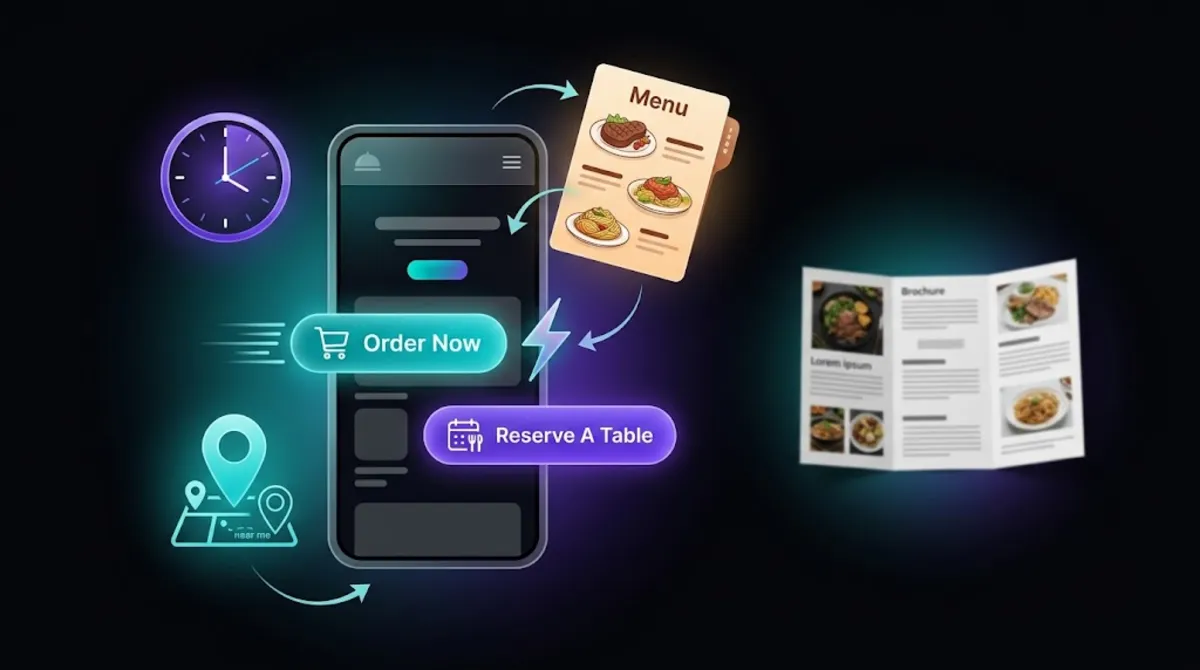
The dining context changes how the site must be built. Several factors make it genuinely different:
- Visitors are hungry and on mobile. Most restaurant searches happen on phones, often from someone deciding where to eat right now, so speed and a tap-friendly layout matter enormously.
- They check before they visit. A large majority of diners look at a restaurant’s website before deciding, and many are put off by a poor or outdated one.
- The site is a revenue surface. Ordering and reservations happen here, so the website directly affects takings rather than just brand image.
- Local search is everything. Diners search by area and “near me,” and a well-optimised Google Business Profile plus the top local results capture the vast majority of clicks.
Because of all this, many restaurants build on a flexible, well-supported platform, commonly WordPress, so the site can be tailored to ordering, reservations, and local SEO rather than forced into a rigid template. The point is that a restaurant website is a revenue build, and the most costly mistakes are the ones a generalist does not even know to avoid. If you want the whole build handled end to end, our custom WordPress development service is built for exactly this.
Pro tip: Open your current site on your phone and time how long it takes to find “order” or “book a table.” If it takes more than a couple of seconds, you are losing hungry visitors before they act.
The Third-Party Trap: Owning vs Renting Your Customers
The biggest hidden mistake in a restaurant website is the third-party trap: routing your own website visitors to delivery apps that charge 15 to 30 percent commission and keep your customer data, when a direct ordering system on your site would keep the margin and the relationship. This single choice can decide whether the site makes or loses you money.
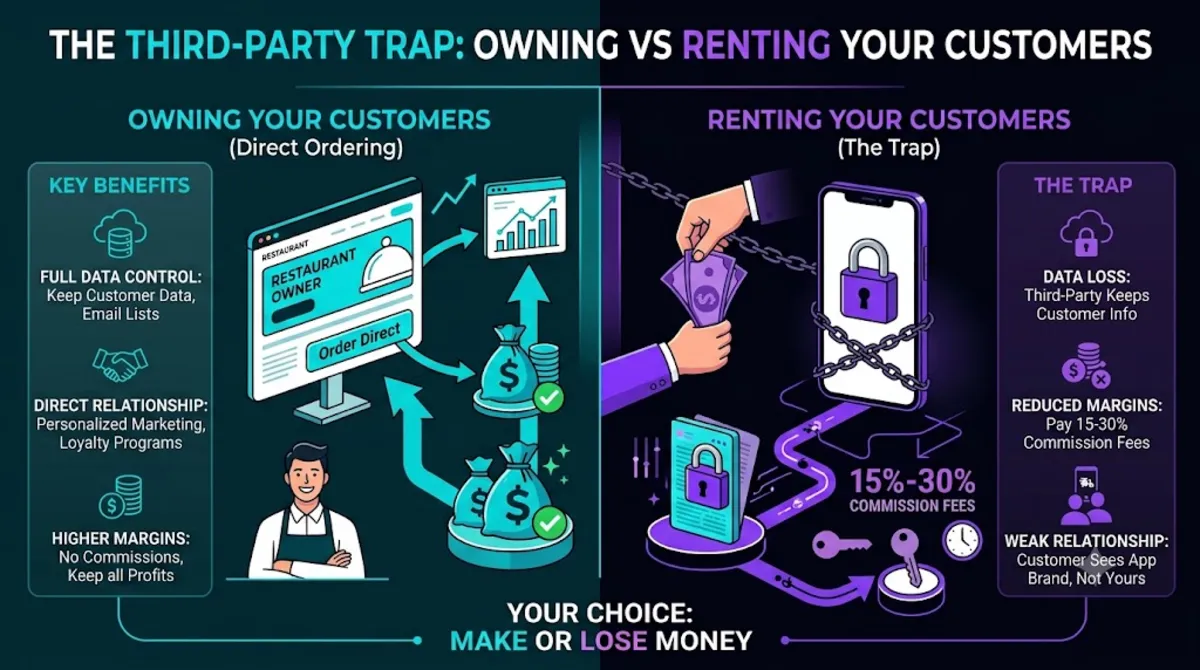
This is where the wrong build quietly costs you the most. When someone lands on your website, you have already won that customer, through your food, your reputation, your local ranking. If your site then sends them to a third-party app to order, you pay a commission of 15 to 30 percent on a sale you generated yourself, and the platform, not you, owns that customer’s data and the ordering relationship.
Industry figures put direct orders at keeping roughly 95 percent or more of the revenue, versus 60 to 70 percent after third-party commissions, and the annual savings from moving orders in-house can run to many thousands of dollars.
A direct ordering system built into your website flips that maths. The order comes straight to you, the margin stays with you, and you build a customer record you own and can market to.
A specialist restaurant developer designs the site around this from the start; a generalist often just embeds a delivery-app widget because it is easy, and unknowingly builds the trap into your own site. Notably, a large majority of customers say they would rather order directly from a restaurant’s own website than through a third-party app, so building for direct ordering serves the customer too.
Pro tip: Ask a candidate, “How will people order from my site?” If the answer is “we’ll link to your delivery apps,” keep looking. You want direct ordering that keeps the margin and the customer.
Want a site built for direct orders, not commissions?
We build restaurant sites around direct ordering, reservations, and local search, so you keep the margin and the customer. See our restaurant web development.
The PDF Menu Mistake That Costs You Orders
The most common technical mistake on a restaurant website is a PDF or image menu, because PDFs are hard to read on phones and nearly invisible to Google and AI search, so your dishes never rank and mobile visitors give up. A real menu is HTML text on the page. This alone separates a specialist from a generalist.
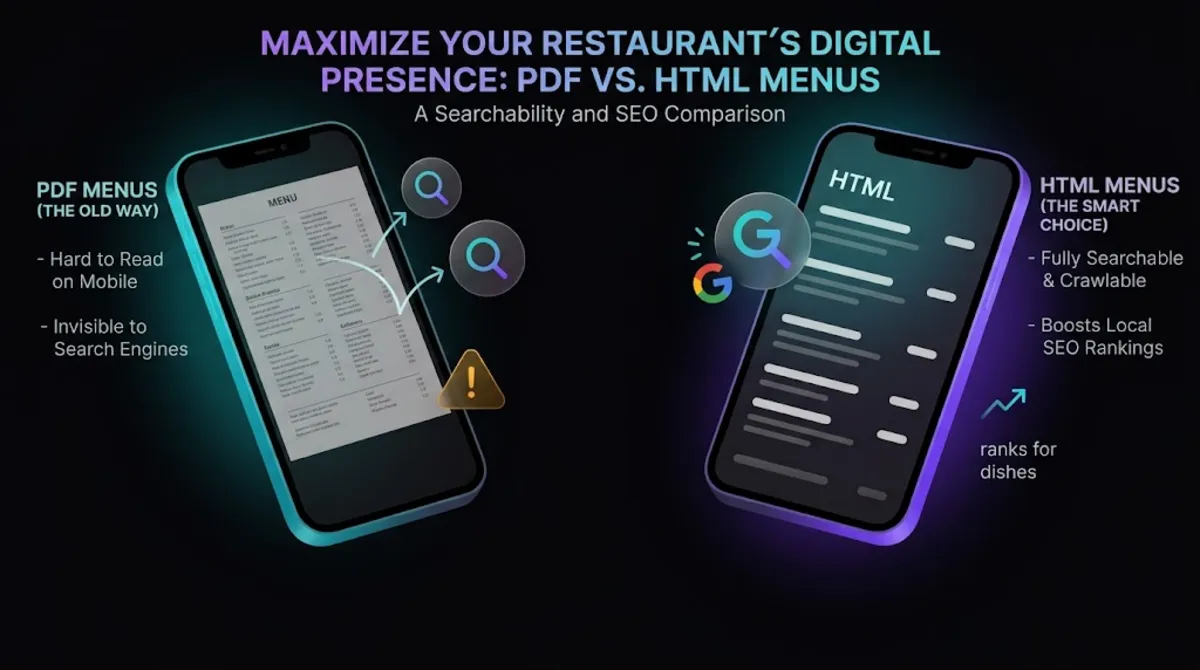
The menu is the single most-visited part of any restaurant website, and putting it in a PDF undermines the whole site. A PDF forces mobile visitors to pinch, zoom, and squint, which is exactly the friction that makes a hungry customer leave. Worse, search engines and AI assistants struggle to read PDFs, so your dishes never show up when someone searches for them.
An HTML menu, by contrast, is fast on mobile, and it gives Google and AI something to index, so you can rank for dish-level searches like a specific dish in your city.
Proper structured data for your restaurant and menu reinforces this, helping you appear in rich results and AI answers.
Proper structured data for your restaurant and menu reinforces this, helping you appear in rich results and AI answers.
This is a perfect example of why a restaurant specialist matters. A generalist may not know that a PDF menu quietly kills search visibility and mobile conversions, so they upload the PDF the owner hands them and consider the job done. A specialist builds the menu as structured HTML, keeps it easy to update, and makes it the conversion centre of the site. If the menu is not real text on the page, the build has failed at its most important job.
Pro tip: If a developer is happy to “just upload your PDF menu,” that is a red flag. Insist on a real HTML menu you can update yourself, with dish names and prices as actual text.
Who Should Build It: Freelancer, Builder, or Studio
To build a restaurant website you can hire a cheap freelancer, use a DIY template builder, or hire a studio with real restaurant experience, and the right choice depends on how much your website drives orders and bookings rather than just existing. For most restaurants, direct revenue is the point, which raises the stakes.
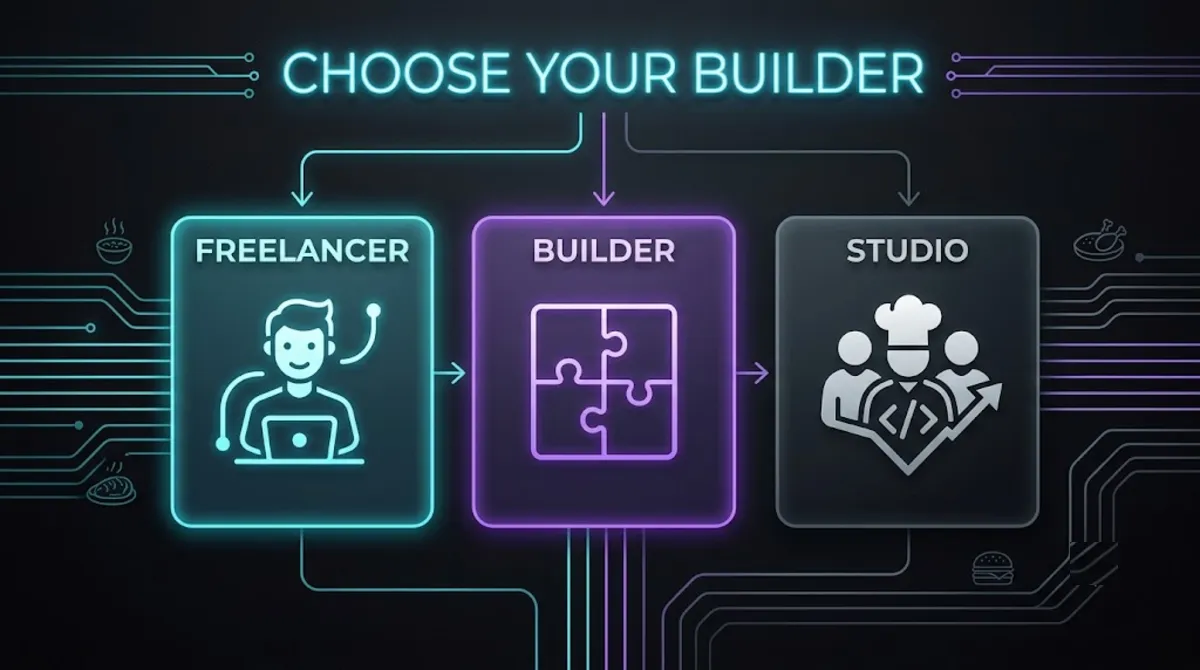
Your realistic options, and what each tends to deliver, look like this. A studio with genuine restaurant experience knows about direct ordering, HTML menus, and local SEO, and builds the site as a revenue system, which is the safest choice when the website matters to your takings. A DIY template builder can work for a very simple presence, though these often push you toward their own ordering fees and rarely nail local SEO or a truly custom feel.
A cheap freelancer is a gamble: some are excellent, but many will hand you a good-looking site with a PDF menu and a link to your delivery apps, missing the things that actually make a restaurant website profitable. The lowest-bid template job is the riskiest, because it tends to fail on exactly the ordering, menu, and local-search points that decide whether the site earns its keep.
The pattern is that the more your website is meant to drive orders and reservations, and for most restaurants that is the whole point, the more it pays to hire genuine restaurant capability rather than the cheapest option.
Hiring one team to design and build also avoids the gap where a nice design ships with none of the revenue plumbing behind it. For the broader question of who to hire for any web build, our guide on hiring a WordPress developer covers the fundamentals.
Want a studio that understands restaurants?
We build fast, direct-ordering restaurant sites designed and developed by one team. Tell us about your restaurant.
What a Good Restaurant Website Is Worth
A good restaurant website is worth far more than it costs, because direct orders, more reservations, and better local ranking add up quickly, and the commission you avoid on delivery apps alone can pay for the site. The return is unusually direct in food service.
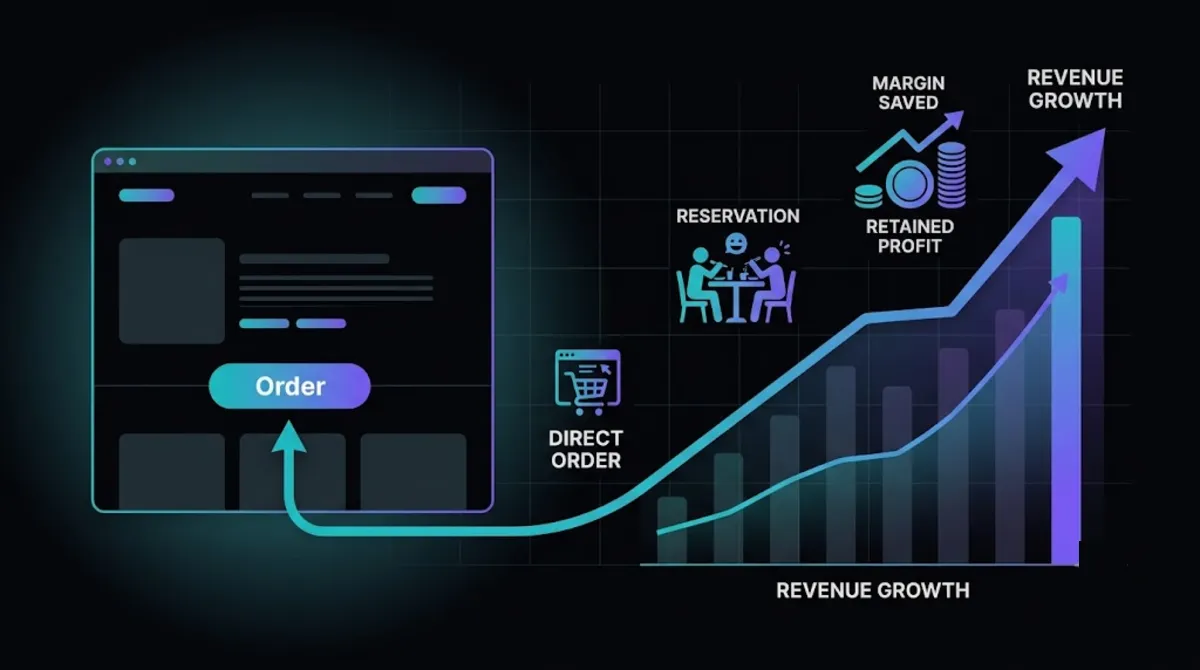
The economics are unusually favourable in restaurants. Most diners check a website before deciding where to eat, so a fast, appealing site with an easy menu and clear ordering directly grows both dine-in visits and orders. And because moving orders off commission-taking apps and onto your own site keeps a far larger share of each sale, the savings compound every single order, often adding up to thousands of dollars a year that used to go to a delivery platform.
Set that against the cost of the site and the case is clear. You are not buying a nicer-looking page, you are buying a revenue system that earns direct orders, fills tables through local search, and stops leaking margin to third parties.
If a better-built site shifts even a modest share of orders in-house and lifts local visibility, it pays for itself quickly and keeps paying. You can see transparent numbers on our pricing page. That value framing also sets realistic expectations for what the build costs.
What a Restaurant Website Costs in 2026
A custom restaurant website typically costs $2,000 to $8,000 in 2026, depending on the size of the restaurant, whether it includes direct online ordering, reservations, and how much custom design and content it needs. Specialist builders cost more because they deliver a revenue system, not just a page.
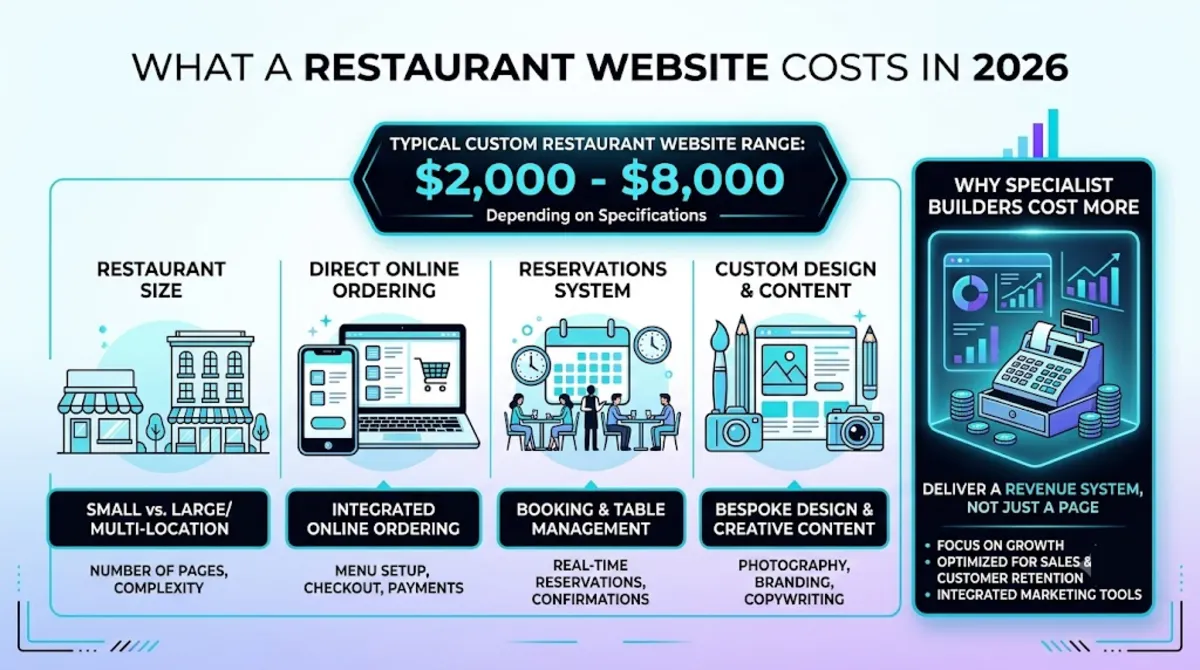
Here is roughly what to expect in 2026:
- Simple single-location site: $2,000–$4,000 for a fast, mobile-first site with an HTML menu, local SEO basics, and reservations or a simple ordering link.
- Full direct-ordering site: $4,000–$8,000+, reflecting integrated direct online ordering, richer local SEO, custom design, and multiple locations or menus.
- Very cheap offers: the sub-$1,000 template jobs almost always ship a PDF menu, third-party ordering links, and weak local SEO, which is exactly where a restaurant website has to be strong.
The value case for paying properly is straightforward: a specialist delivers a fast, direct-ordering, locally optimised site that grows revenue, while a bargain template job produces a pretty page that leaks orders to delivery apps and hides your menu in a PDF. You are paying for a revenue system, not a brochure. Because hungry visitors abandon slow sites fast, ongoing website speed optimization is also worth keeping in mind. Before you commit, these seven checks confirm you have the right builder.
Want a clear quote for your restaurant’s site?
Tell us about your menu, ordering, and locations and we will scope a fixed-price build. Get a restaurant website quote.
7 Things to Look For Before You Hire
Before you hire someone to build your restaurant website, look for these seven things. Because the revenue-critical details are invisible in a portfolio of pretty screenshots, these checks separate a genuine restaurant-capable builder from a generalist.
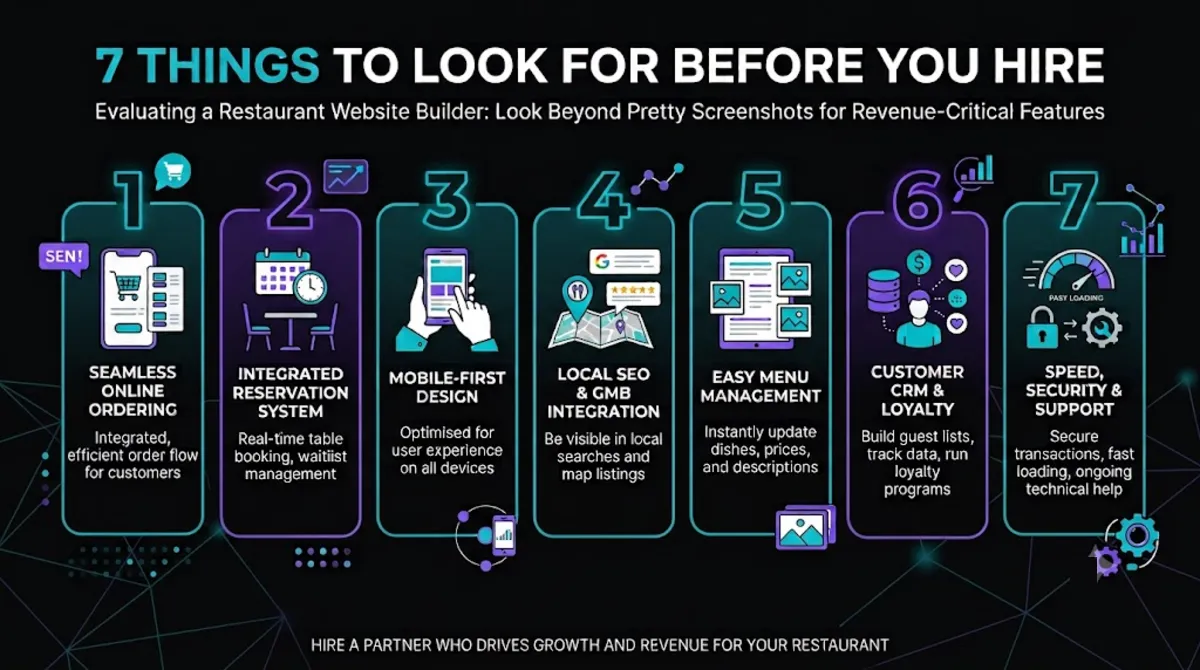
- Direct-ordering thinking. They build ordering into your site to keep the margin, rather than linking out to commission-taking apps.
- A real HTML menu. They build the menu as text you can update, not a PDF or image.
- Local SEO capability. They understand Google Business Profile, local schema, and ranking for “near me” searches.
- Mobile speed. They build fast, tap-friendly sites, since most diners are on phones and impatient.
- Reservations and clear calls to action. Booking and ordering are obvious and one tap away on every device.
- Real restaurant work. Actual restaurant sites in their portfolio, not general business work with a cafe mentioned in passing.
- Clear ownership. You own the domain, the site, the content, and your customer data, with no lock-in.
These checks work because genuine restaurant-web capability shows up in how a builder thinks about orders and search, not in how their screenshots look. A specialist raises direct ordering and the menu before you do, because that is where the revenue lives. Someone who only wants to talk about how the site looks, and shrugs at ordering and local SEO, is a generalist who will leave the profitable parts out.
Pro tip: Ask, “How will my site help me rank for local searches and take orders directly?” A restaurant specialist has a clear, specific answer. A generalist talks only about the design.
Use the quick tool below to see what kind of build fits your restaurant.
Ready for a restaurant website that brings in orders?
We build fast, direct-ordering, locally optimised sites for restaurants. Tell us about your restaurant and we will take it from there. Start the conversation.
Frequently Asked Questions
I own a restaurant and need a website, who should I hire?
Hire someone with genuine restaurant experience: a builder who sets up direct online ordering so you keep the margin, builds your menu as real HTML rather than a PDF, and understands local SEO and mobile speed, not a generalist who just makes it look nice. Often the safest option is a studio that both designs and builds and has real restaurant work. Restaurant sites are a core part of what we do, so if you want it built to drive orders and bookings, we would be glad to help, and the same criteria apply to vetting anyone.
Why can’t a regular web designer build my restaurant website?
A talented generalist can build an attractive site, but many miss the things that make a restaurant website profitable: direct ordering that avoids delivery-app commissions, an HTML menu that ranks and reads well on phones, and local SEO that gets you found. The result is a pretty site that quietly leaks orders to third parties and hides your menu in a PDF. Restaurant-specific experience is what turns a nice-looking site into a revenue system.
How much does a restaurant website cost?
A custom restaurant website typically costs $2,000 to $4,000 for a simple single-location site and $4,000 to $8,000 or more for a full site with integrated direct online ordering, richer local SEO, and multiple locations or menus, in 2026. Very cheap template jobs usually ship a PDF menu, third-party ordering links, and weak local SEO, which is exactly where a restaurant website has to be strong.
Should my restaurant website have its own online ordering?
Ideally yes, if ordering matters to your business. Third-party delivery apps charge 15 to 30 percent commission and keep your customer data, so sending your own website visitors to them means paying a fee on customers you already won. Direct ordering built into your site keeps far more of each sale and gives you a customer relationship you own. Most customers also say they prefer to order directly from a restaurant’s own site.
Why shouldn’t my menu be a PDF?
A PDF menu is hard to read on phones, forcing visitors to pinch and zoom, which drives hungry customers away. It is also nearly invisible to Google and AI search, so your dishes never rank when people search for them. A menu built as real HTML text is fast on mobile and lets you rank for specific dishes and cuisines. It is one of the clearest signs of whether a developer understands restaurants.
What platform is best for a restaurant website?
Many restaurants use WordPress, because it is flexible, well supported, and can be tailored to restaurant-specific needs like HTML menus, direct ordering, reservations, and strong local SEO, without being locked into a rigid template or forced into a provider’s ordering fees. A well-built custom WordPress site gives you clean code, good performance, and full ownership. The platform matters less than whether the builder understands restaurants and builds properly.
Do I own my restaurant website and customer data after it is built?
You should, and this is worth confirming before you hire. A good builder gives you clear ownership of the domain, the site, the content, and your customer data, with no lock-in and no hostage situation over hosting or logins. This matters especially with ordering: some third-party systems keep your customer data. Ask directly who owns each asset, and be wary of any provider that keeps control of your domain, content, or customers.
Conclusion
When you own a restaurant and need a website, hire for revenue capability, not just design. The right builder understands that a restaurant website has to win a hungry, mobile visitor in seconds, drive direct orders and reservations rather than funnelling them to commission-taking apps, present the menu as real HTML that ranks, and get you found in local search. The two biggest mistakes are the third-party trap, paying commission on customers your own site already won, and the PDF menu, which kills mobile conversions and search visibility at once. Check for direct-ordering thinking, an HTML menu, local SEO and mobile speed, and clear ownership of your site and data, and you will quickly separate the restaurant-capable builders from the generalists. Get it right and your website becomes what it should be: a revenue system that fills tables and takes orders around the clock.
Ready for a restaurant website done right?
We build fast, direct-ordering, locally optimised sites for restaurants. Tell us about your restaurant and we will make it your best source of orders and bookings. Get started today.
This article was last reviewed and updated in {{UPDATED}} to reflect current 2026 restaurant website standards, direct-ordering economics, and builder rates.